
CAR T-cell therapy — research overview
CAR T-cell therapy is a form of immunotherapy that uses specially modified T-cells – part of the immune system – to fight various diseases: cardiovascular, cancer and even age! A sample of a patient’s T cells is taken from the blood, then modified to produce special structures called chimeric antigen receptors (CARs) on their surface.
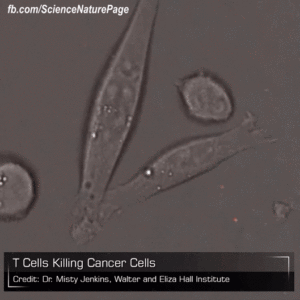
CAR T-cell therapy is a form of immunotherapy in which a person’s own T-cells are modified to express chimeric antigen receptors (CARs). This page summarises scientific research and is for information and education only — it is not medical advice and not an offer of treatment. CAR-T is an authorised therapy only for certain cancers and only in specific, regulated clinical settings; other applications discussed in the research literature are investigational.
Tumor factors stimulate trogocytosis, a process derived from the Greek word trogo, which means to gnaw or chew. When T cells interact with cancer cells, they can sometimes bite off part of the cancer cell’s membrane. When this membrane segment includes an antigen, a cancer-specific molecule, T cells can then begin to express that antigen on their own cell surface, making it look like a cancer cell to other T cells.
ATF3 gene, opposes CH25H activity. Elimination of AFT3 prevents the occurrence of trogocytosis and restores the ability of T cells to kill tumor cells. Since trogocytosis may reduce the efficiency of engineered T cells delivered to CAR T, blocking it may improve the efficiency of CAR T. Delivery of CAR T cells enriched in CH25H improves the survival of animal models with cancer compared to unarmored CAR T cells. www.cell.com/cell-metabolism/fulltext/S1550-4131(22)00350-3
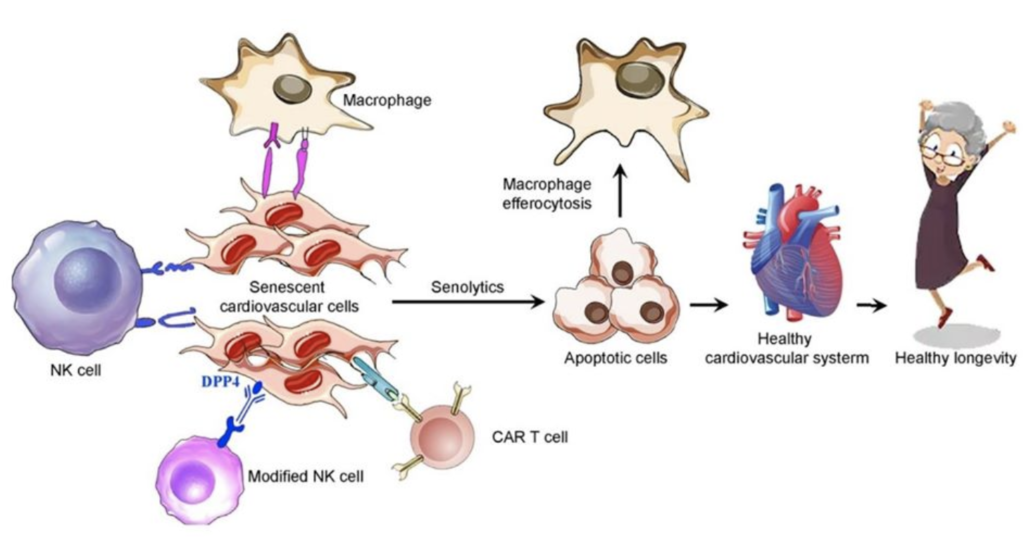
Research has also explored CAR-T approaches in the context of ageing — for example, studies of senolytic CAR T-cells that target senescent cells, and investigations into age-related conditions including cardiovascular disease. These applications are investigational and are studied in laboratory and preclinical research; they are not established or authorised treatments.
www.nature.com/articles/s41586-020-2403-9
doi.org/10.1016/j.arr.2020.101072